Medically reviewed by: Dr. T. Rajeshwari Reddy, MBBS, MS (OBG), DES (Germany), FAMS (New Delhi), PGPMAX (ISB)
Registration: Registered, Andhra Pradesh Medical Council — Reg. No. 57092
Published:
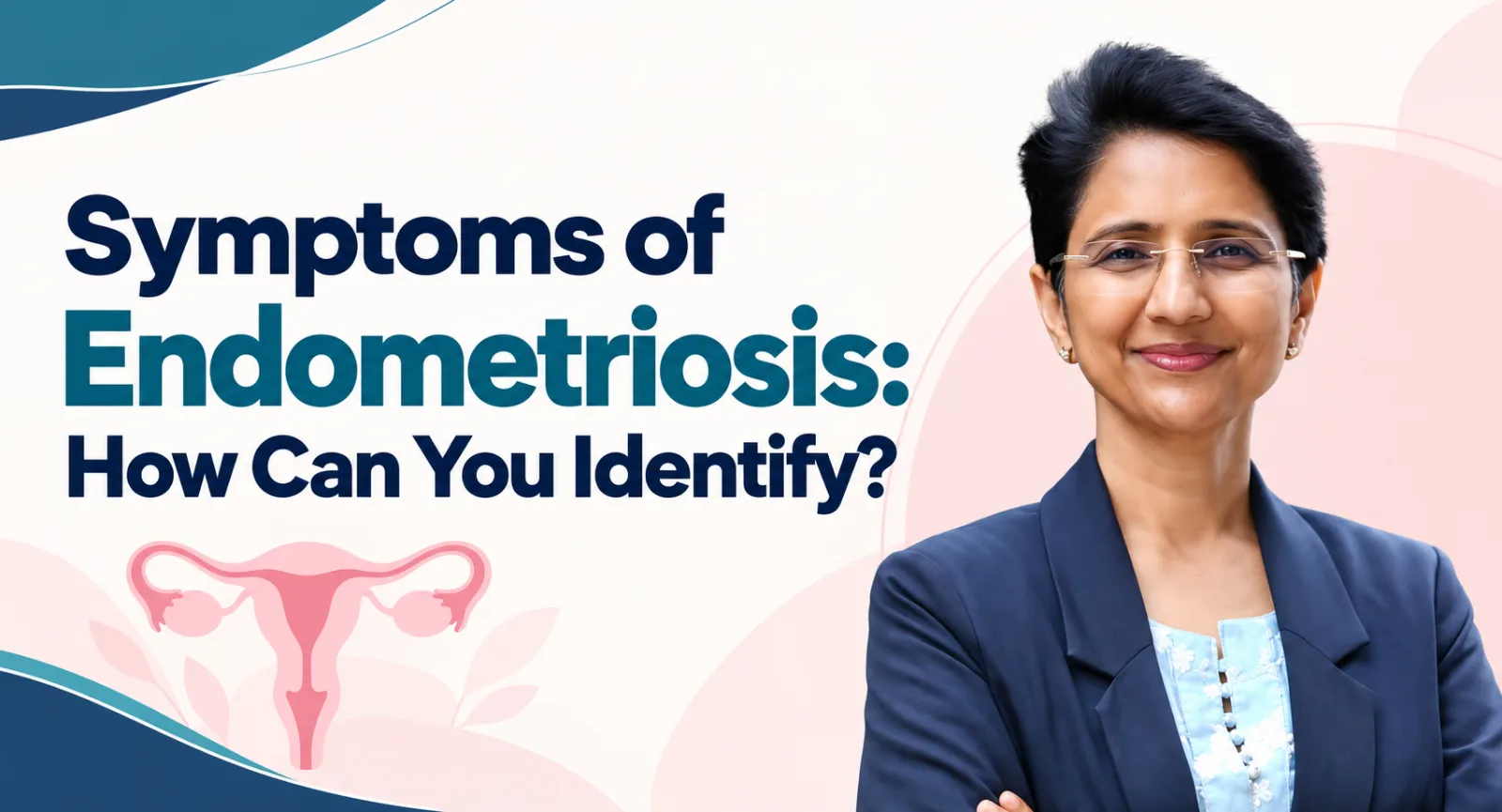
The most common symptoms of endometriosis are period pain severe enough to stop daily activities, pelvic or lower back pain, deep pain during or after sex, pain when passing urine or stools around periods, heavy periods, tiredness and difficulty getting pregnant. Symptoms vary a lot, and a normal scan does not rule it out. See a gynaecologist if pain regularly affects work, sleep or relationships.
Some period pain is common. But if your periods regularly keep you away from work or college, wake you at night, or need you to plan your week around them, it is worth asking whether something more is going on. The most common symptoms of endometriosis are severe period pain, pelvic or lower back pain, deep pain during or after sex, pain when passing urine or stools around your period, heavy periods, tiredness and difficulty getting pregnant.
Dr T Rajeshwari Reddy (MBBS, MS OBG) is a Senior Consultant Obstetrician and Gynaecologist practising at Continental Hospitals, Financial District, Hyderabad.
Key points
- Endometriosis is when tissue similar to the womb lining grows outside the womb, usually around the ovaries, fallopian tubes and pelvis.
- The WHO estimates it affects around 10% of women of reproductive age worldwide.
- Period pain that stops your normal activities is not something you simply have to put up with.
- A normal ultrasound or examination does not rule out endometriosis.
- There is no cure yet, but medicines, hormonal treatment and surgery can help manage symptoms and fertility.
What is endometriosis?
Endometriosis is a long-term condition in which tissue similar to the lining of the womb (the endometrium) grows outside the womb. It is most often found on the ovaries, fallopian tubes and the lining of the pelvis (peritoneum), and sometimes on the bowel or bladder. This tissue reacts to monthly hormone changes, which can cause pain, inflammation and scarring.
According to the World Health Organization, endometriosis affects an estimated 10% of women and girls of reproductive age worldwide, and diagnosis is often delayed by several years because the symptoms overlap with other conditions. How severe the symptoms are does not always match how much endometriosis is present: some women with small areas have a lot of pain, and some with larger areas have very little.
What are the common symptoms of endometriosis?
The most common symptoms are period pain severe enough to disrupt daily life, long-lasting pelvic or lower back pain, deep pain during or after sex, and pain with bowel movements or passing urine around your period. Heavy periods, tiredness, low mood and difficulty getting pregnant are also common. Many women have several of these together.
- Severe period pain that stops you from going to work, college or doing normal activities
- Pelvic or lower back pain, which can continue between periods
- Deep pain during or after sex
- Pain when passing stools or urine, often worse around your period
- Heavy periods, sometimes needing a pad change every one to two hours
- Tiredness (fatigue) that does not improve with rest
- Low mood or anxiety linked to ongoing pain
- Difficulty getting pregnant; endometriosis is sometimes first found during fertility tests
These symptoms are listed by the NHS. Rarely, endometriosis grows in the chest and can cause chest pain or coughing up blood around periods. That needs prompt medical attention.
Can endometriosis cause bloating, tiredness and mood changes?
Yes. Many women with endometriosis notice tummy bloating, nausea, constipation or loose stools, tiredness and mood changes, often worse around their period. These symptoms are not specific to endometriosis, because conditions such as irritable bowel syndrome can cause them too, so it helps to note when they happen in your cycle.
The WHO lists bloating and nausea among common symptoms. Keeping a simple pain and symptom diary for two or three cycles, noting the day of your cycle, where the pain is and what you could not do, gives your doctor a much clearer picture. NICE guidance in the UK also recommends a symptom diary to guide these conversations.
How is endometriosis different from normal period pain?
Ordinary period cramps usually ease with simple measures and do not stop you from living your normal day. Endometriosis pain tends to be stronger, last longer, and may come with pain during sex, bowel or bladder pain, or pain between periods. The table below shows the main differences, but only an assessment can tell them apart reliably.
| Usually ordinary period pain | Worth discussing with a gynaecologist |
|---|---|
| Cramps in the first day or two of the period | Pain that starts before the period and lasts after it ends |
| Eases with rest, a hot water bag or simple pain relief | Stops you from working, studying or sleeping |
| Pain only during periods | Pain between periods, during or after sex, or with bowel movements or passing urine |
| Normal flow | Very heavy bleeding or large clots |
| No effect on getting pregnant | Difficulty getting pregnant after trying for a while |
Painful, heavy periods can also be caused by adenomyosis or fibroids. You can read more about adenomyosis and menstrual disorders on Dr T Rajeshwari Reddy's website.
When should you see a doctor about endometriosis symptoms?
See a gynaecologist if period pain regularly affects your work, studies, sleep or relationships, if you have pain during or after sex, pain with bowel movements or passing urine around your period, or pelvic pain that continues between periods. Also see a doctor if you have been trying to get pregnant without success, or if treatment so far has not helped.
Severe pain that is not normal for you, especially with fever, fainting or vomiting, needs urgent medical care the same day.
practice observation: "Many women who come to me with endometriosis have been told for years that painful periods are normal. By the time they reach the clinic, they have often missed days of work or college every month. Writing down how often pain changes your plans is one of the most useful things you can bring to the first visit."
How is endometriosis diagnosed?
Diagnosis starts with a detailed conversation about your symptoms and periods, followed by a pelvic examination. An ultrasound scan, often done through the vagina (transvaginal), or an MRI may be advised. A normal examination or scan does not rule out endometriosis, and in some cases a laparoscopy is used to confirm it.
- History: when the pain happens, how severe it is, your periods, sexual and bowel or bladder symptoms, and any family history.
- Examination: a gentle abdominal and pelvic examination, if you are comfortable with it.
- Imaging: a pelvic ultrasound (abdominal or transvaginal) and sometimes an MRI to look for endometriosis cysts on the ovaries (endometriomas) or deeper disease.
- Laparoscopy: keyhole surgery in which a camera is passed through a small cut in the tummy. It can confirm endometriosis and, in some cases, treat it at the same time.
NICE guidance advises that endometriosis should not be excluded if the abdominal or pelvic examination, ultrasound or MRI are normal. If symptoms continue, further assessment may be needed.
Watch: Dr T Rajeshwari Reddy explains the symptoms, diagnosis and treatment of endometriosis in this short video on YouTube.
Is endometriosis curable?
There is currently no cure for endometriosis, but it can be managed. Treatment aims to ease pain, protect fertility where needed and improve day-to-day life. Options include pain relief, hormonal treatment, surgery to remove endometriosis tissue or cysts, and fertility support for women who want to become pregnant. The right plan depends on your symptoms, age and plans for pregnancy.
- Pain relief: usually the first step, as advised by your doctor
- Hormonal treatment: reduces the hormone-driven growth of endometriosis tissue; not used while trying to conceive
- Surgery: laparoscopic, and in some cases robotic, surgery to remove endometriosis tissue or cysts when medicines are not enough or the disease is extensive
- Fertility support: referral for fertility assessment and treatment if you are trying to get pregnant
- Lifestyle and support: regular activity, pain-management strategies and emotional support can help alongside medical care
You can read about robotic surgery for endometriosis on Dr T Rajeshwari Reddy's website.
Sources
- NHS – Endometriosis
- World Health Organization – Endometriosis fact sheet
- NICE guideline NG73 – Endometriosis: diagnosis and management (recommendations)
This article is for general health information only and is not a diagnosis or a substitute for a consultation. Consult a qualified doctor if symptoms persist or get worse.
Frequently Asked Questions
What are the first signs of endometriosis?
For many women, the first sign is period pain that gets steadily worse or stops normal activities, sometimes starting in the teenage years. Pain during sex, pain with bowel movements around periods, and pelvic pain between periods are other early signs to discuss with a gynaecologist.
Can endometriosis be seen on an ultrasound?
Sometimes. An ultrasound, especially a transvaginal scan, can show endometriosis cysts on the ovaries and some deeper disease. Smaller areas of endometriosis are often not visible, so a normal scan does not rule it out.
Can I get pregnant if I have endometriosis?
Many women with endometriosis do get pregnant, some naturally and some with fertility treatment. Endometriosis can make conceiving harder for some women, so if you have been trying without success, speak to your gynaecologist about a fertility assessment.
Is endometriosis the same as adenomyosis?
No. In endometriosis, tissue similar to the womb lining grows outside the womb. In adenomyosis, this tissue grows into the muscle wall of the womb. Both can cause painful, heavy periods, and some women have both.
Does endometriosis go away after menopause?
Symptoms often settle after menopause, when hormone levels fall, but this is not the case for everyone. Your doctor can advise how this applies to you.
Can teenagers have endometriosis?
Yes. Endometriosis can start in the teenage years. A teenager whose period pain regularly makes her miss school or activities should be seen by a doctor rather than being told it is normal.