Medically reviewed by: Dr. T. Rajeshwari Reddy, MBBS, MS (OBG), DES (Germany), FAMS (New Delhi), PGPMAX (ISB)
Registration: Registered, Andhra Pradesh Medical Council — Reg. No. 57092
Published:
Robotic and laparoscopic hysterectomy are both keyhole operations to remove the uterus through a few small cuts. For non-cancer conditions such as fibroids, research shows broadly similar results for complications, blood loss and hospital stay, while robotic surgery usually costs more. The right route depends on scans, past surgeries, weight, the condition and insurance cover.
If you have been advised a hysterectomy (an operation to remove the uterus) and keep hearing about two keyhole options, here is the short answer. Robotic and laparoscopic hysterectomy are both minimally invasive surgery done through a few small cuts. For non-cancer conditions such as fibroids or adenomyosis, research so far shows broadly similar results for complications, blood loss and hospital stay. Robotic surgery usually costs more. Which route suits you depends on your scans, past surgeries, weight, the condition being treated and your insurance cover.
Dr T Rajeshwari Reddy is an obstetrician and gynaecologist practising at Continental Hospitals, Financial District, Hyderabad, where she performs laparoscopic, hysteroscopic and robotic gynaecological surgery.
Key points
- Both are keyhole (minimally invasive) ways to remove the uterus through small cuts in the abdomen.
- In robotic surgery the surgeon controls robotic arms from a console. The robot does not operate on its own.
- For non-cancer conditions, studies show small or no differences in complications, blood loss and switching to open surgery.
- Robotic surgery generally costs more, and insurance cover depends on your policy.
- The right route is chosen after an examination and scans, not from a general rule.
What is the difference between robotic and laparoscopic hysterectomy?
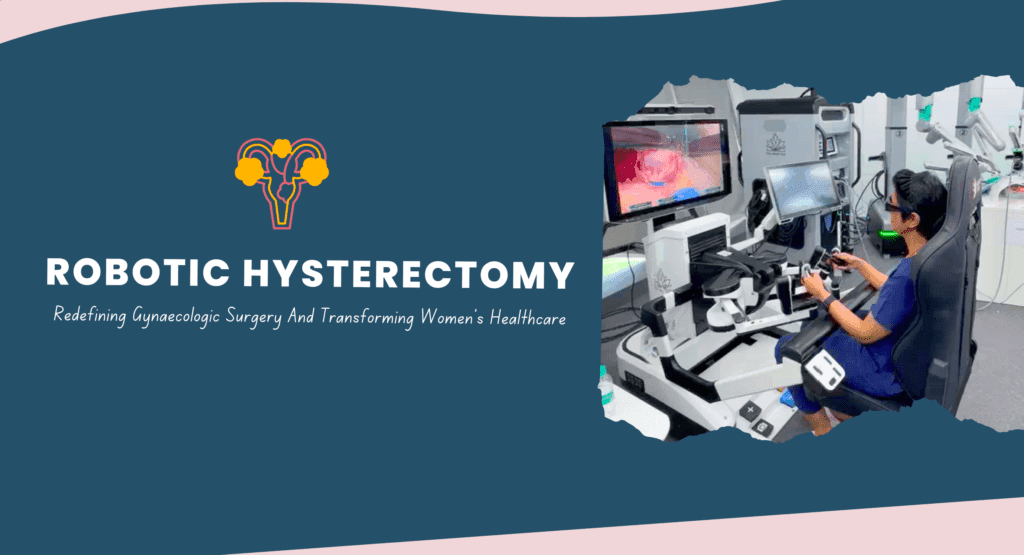
Both remove the uterus through small cuts in the abdomen using a camera. In a laparoscopic hysterectomy the surgeon holds long, thin instruments directly. In a robotic hysterectomy the same surgeon sits at a console a few feet away and moves robotic arms that hold the camera and instruments. What happens inside the body is the same operation.
Laparoscopy means looking inside the abdomen with a thin telescope (laparoscope), after gently filling the abdomen with gas to make room. Robotic surgery is really robot-assisted laparoscopy. The surgeon sees a magnified 3D picture, and the instruments have small "wrists" that bend and rotate. Every movement is the surgeon's own. For a step-by-step look at the day itself, read what happens during a robotic hysterectomy.
Your gynaecologist may also mention a vaginal hysterectomy (no cut on the abdomen) or an abdominal (open) hysterectomy through one larger cut. The American College of Obstetricians and Gynecologists (ACOG) advises using keyhole or vaginal routes whenever they are feasible, and keeping open surgery for women who need it.
| Laparoscopic hysterectomy | Robotic hysterectomy | |
|---|---|---|
| Who moves the instruments | Surgeon's hands, directly | Surgeon, through robotic arms from a console |
| View | Camera image on a screen | Magnified 3D view at the console |
| Cuts | A few small cuts in the abdomen | A few small cuts in the abdomen |
| Complications, blood loss (non-cancer) | Similar in research | Similar in research |
| Operating time | Varies with the case | Can be longer, partly because of set-up |
| Cost | Generally lower | Generally higher |
| Availability | Widely available | Only in hospitals with a robotic system |
Is robotic hysterectomy better than laparoscopic hysterectomy?
Not for everyone. A 2019 Cochrane review of randomised trials compared the two for non-cancer conditions. It found that robot-assisted hysterectomy may make small or no difference to complications, blood loss or the chance of switching to open surgery. The better option is the one that fits your body and condition.
So where can the robot help? In 2024, Health Technology Wales noted that it can make a keyhole approach possible for some women who would otherwise need open surgery. It also concluded that the evidence is not yet strong enough to recommend it for everyone. Surgeons may consider it for:
- a large uterus, for example with big fibroids
- dense scar tissue (adhesions) after C-sections or other surgery
- extensive endometriosis or adenomyosis
- higher body weight, where reaching deep in the pelvis is harder
From Dr Rajeshwari's practice
"Many women come in asking straight away whether robotic is better. I find the more useful question is what her scans show and what her recovery needs to look like at home and at work. Once we look at that together, the choice of route usually becomes clear." – Dr T Rajeshwari Reddy
Which has a shorter recovery: robotic or laparoscopic hysterectomy?
Recovery is broadly similar, because the cuts are similar. The NHS says women can often leave hospital 1 to 4 days after a laparoscopic hysterectomy. It also says recovery is often shorter than the 6 to 8 weeks usually needed after an abdominal (open) hysterectomy. Your age, health and type of work all change the timeline.
The Cochrane review could not show a clear difference in hospital stay between the two, so choosing the robot should not be expected to shorten recovery on its own.
What does recovery usually look like?
- Day after surgery: you are encouraged to take a short walk. This helps blood flow and lowers the risk of clots in the legs.
- Going home: often within 1 to 4 days after a keyhole hysterectomy, depending on how you are doing.
- First few weeks: tiredness is normal. Light vaginal bleeding or discharge can last up to 6 weeks.
- Driving: only once you can wear a seatbelt comfortably and do an emergency stop. The NHS puts this at anywhere from 2 to 6 weeks.
- Lifting and sex: avoid heavy lifting while you heal. The NHS advises waiting at least 4 to 6 weeks for sex, until wounds have healed and discharge has stopped.
- Back to work: this depends on your job, so agree a date with your doctor.
See your doctor quickly if you have heavy bleeding, pass clots, or notice strong-smelling discharge.
Why does robotic hysterectomy cost more?
Mainly because of the robot itself. Hospitals pay for the system, its upkeep and special instruments that are replaced after a set number of uses, and theatre time can be longer. Health Technology Wales found higher costs for robot-assisted than laparoscopic hysterectomy in every scenario it modelled, even with similar clinical results.
Costs differ between hospitals and depend on room type, length of stay, tests and any extra procedures. Ask the hospital billing desk for a written estimate for each route.
Does health insurance cover robotic hysterectomy in India?
Often, but read the fine print. Since 2019, IRDAI (the Insurance Regulatory and Development Authority of India) has required health insurers to cover robotic surgery as a "modern treatment". However, many policies cap the amount with a sub-limit.
Before your surgery date, check the policy's "modern treatment" clause, any sub-limit or co-payment, waiting periods for your condition, and whether pre-authorisation is needed.
Who qualifies for a robotic or laparoscopic hysterectomy?
Most women who need a hysterectomy for a non-cancer reason can be considered for a keyhole approach. ACOG lists the factors that shape the choice, including the size of the uterus, the surgeon's training, the hospital's equipment and your own informed preference. Your gynaecologist will usually look at:
- Your scans: the size of the uterus, and the number and position of fibroids
- Past surgery: C-sections or other abdominal operations that can leave scar tissue
- Endometriosis or adenomyosis: how far it has spread
- Your general health: heart and lung health, because keyhole surgery involves gas in the abdomen and a head-down position
- Whether cancer is known or suspected: this can change the plan and the route
- Your preferences and cover: what matters to you, and what your insurance will pay for
When might open surgery still be needed?
ACOG notes that open abdominal hysterectomy remains an important option for some women. This may apply when the uterus is very large, or when the uterus needs to come out in one piece because cancer is suspected. Occasionally a keyhole operation is changed to open surgery partway through for safety. Your surgeon should explain this before you consent.
Questions to ask before you choose
- Why do you suggest this route for me?
- Could a vaginal or laparoscopic hysterectomy work in my case?
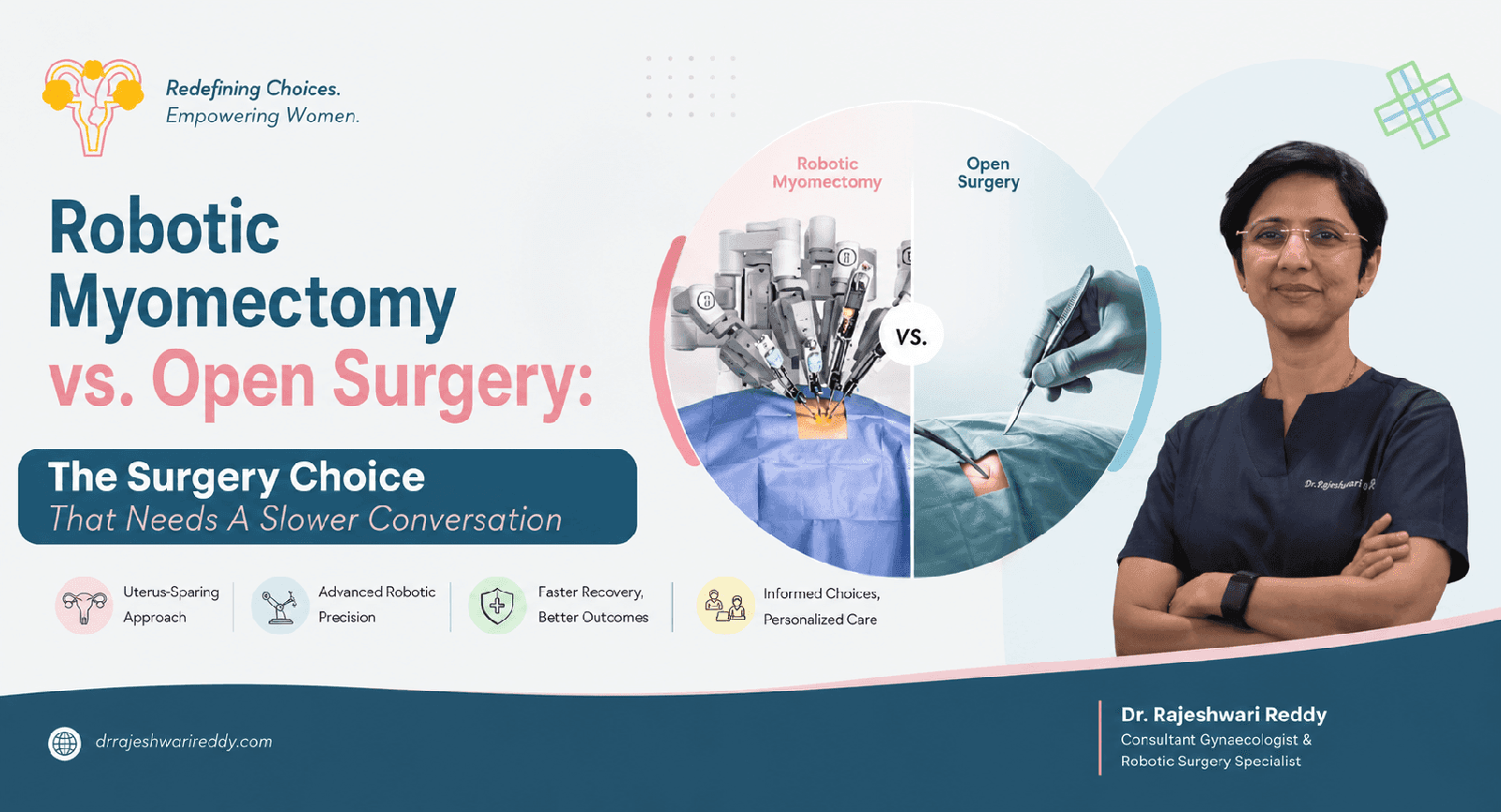
- Is there a treatment that keeps my uterus? (For fibroids, see robotic myomectomy vs open surgery.)
- Will my cervix, tubes or ovaries be removed?
- How long will I be in hospital and off work?
- What training and experience do you have with this approach?
Sources
- NHS. Hysterectomy – Recovery
- ACOG Committee Opinion No. 701: Choosing the Route of Hysterectomy for Benign Disease (PubMed)
- Norwegian Institute of Public Health. Robot-assisted hysterectomy for benign conditions (summary of the 2019 Cochrane review)
- Health Technology Wales. Robot-assisted benign gynaecological surgery
- Business Today. Is robotic surgery covered under a health insurance policy?
Consult a qualified gynaecologist if you have heavy periods, pelvic pain or other symptoms that persist, so the cause can be checked before any treatment is decided.
Frequently Asked Questions
Is robotic hysterectomy safe?
For non-cancer conditions, research shows a safety profile similar to laparoscopic hysterectomy. Both carry the usual risks of surgery, such as bleeding, infection, injury to the bladder or bowel, and blood clots.
Will I have scars?
Both routes use a few small cuts on the abdomen. These usually heal into small marks, and how they look varies from person to person.
Will a hysterectomy cause menopause?
Only if the ovaries are removed. If your ovaries stay, your periods stop but your hormones carry on. If they are removed, menopause symptoms can start soon after surgery.
Can I ask for robotic surgery if I prefer it?
Yes. ACOG lists your informed preference as one of the factors, alongside whether robotic surgery suits your case and what your insurance covers.